In this episode of What's in the Sky this Month, Teagan reviews some of the beautiful celestial objects you can see in the month of June 2026!
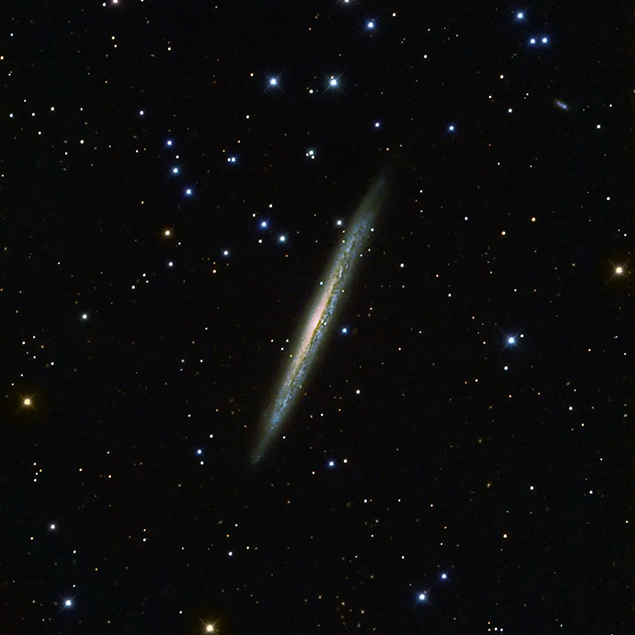
Image credit: Terry Hancock
NGC 5907 - The Splinter Galaxy
High in the northern sky in Draco lies NGC 5907, also known as the Splinter Galaxy - a razor-thin spiral seen perfectly edge-on. Stretching about 100,000 light-years across, it glows near magnitude 10 and is faintly visible in large binoculars under very dark skies. Through small telescopes, it appears as a dim, needle-like streak; with medium apertures revealing a narrow dust lane dividing the disk and large instruments showing subtle mottling and a soft glow tapering at each end. Astrophotographers can capture its delicate symmetry and the ghostly halo that surrounds it.
Although discovered by William Herschel on May 5th, 1788, deep imaging has since revealed a faint stellar stream looping around it - evidence of a long-ago galactic merger. NGC 5907 offers a glimpse of cosmic evolution in action and is one of the most elegant spirals of the northern summer sky.
OUR NEAREST NEIGHBORS
Uranus is too close to the Sun to be seen this month, but the evening sky offers a triple planetary treat towards the west-northwest. Mercury twinkles low in twilight for most of June, from around 15 minutes after sunset. Much easier to see is dazzling Venus, high to its upper left on the 1st. Extend the line farther, and you’ll reach golden Jupiter, with Castor and Pollux nearby. Venus drifts closer to Jupiter as the days pass, with the two fitting within a 10×50 binocular field from the 3rd to the 15th and just 1.5° apart on the 9th. Jupiter then drops toward Mercury, with the Moon appearing between them on the 16th before passing very close to Venus on the 17th. Mercury and Jupiter share a binocular field that same night, though Mercury fades into twilight before their closest approach. In the morning, Saturn rises a few hours before dawn in Pisces, joined by the waning Moon on the 10th. Mars is low over the eastern horizon in the predawn twilight, with the Moon above it on the 12th, while Neptune slowly emerges from the dawn twilight late in the month. Lastly, the Moon turns new in Taurus on the 14th, then waxes to a Full Strawberry Moon in Sagittarius on the 29th.
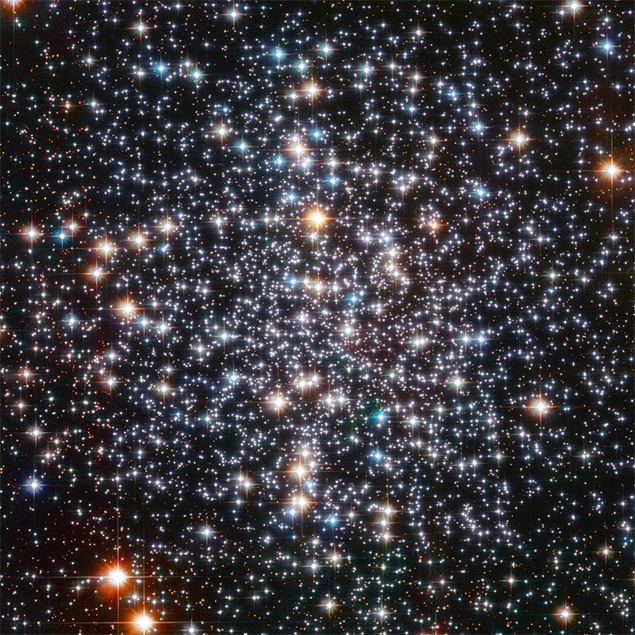
Image credit: ESA/Hubble & NASA
Messier 4
Messier 4 lies just west of Antares in Scorpius, and, spanning about half a degree in the sky, is one of the largest globulars in terms of apparent size. Binoculars show a hazy glow, while telescopes resolve it into countless stars and reveal a distinctive bar of stars across its core.
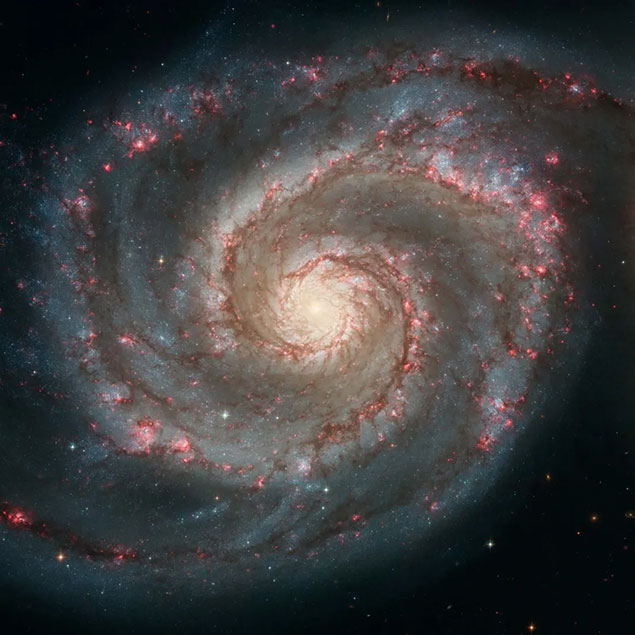
Image credit: NASA, ESA, S. Beckwith (STScI) and the Hubble Heritage Team (STScI/AURA)
Messier 51 - The Whirlpool Galaxy
Messier 51 is a face-on spiral galaxy interacting with NGC 5195. In small scopes, it appears as two faint smudges; medium scopes begin to show a core and haze. Smart telescopes reveal its spiral arms and knots of star formation.
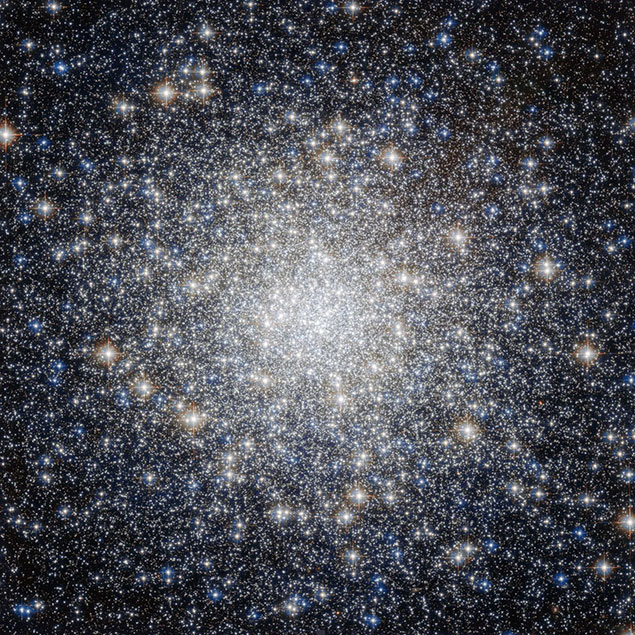
Image credit: ESA/Hubble & NASA
Messier 92
Messier 92 is a bright globular cluster often overshadowed by nearby Messier 13. In binoculars, it appears as a small, hazy glow, while small to medium telescopes reveal a compact, concentrated core with faint outer stars spreading outward. Higher magnifications bring out its dense, grainy texture, rewarding careful observation under dark skies.
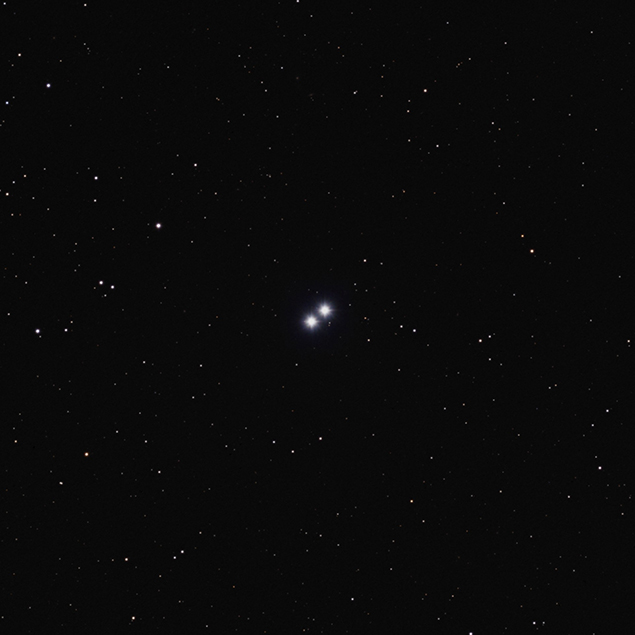
Image credit: David Ritter
Nu Draconis - Kuma
Nu Draconis, or Kuma, is a wide, even pair of white stars in Draco. Nearly identical in brightness, they’re an easy split in binoculars, and a showpiece double in small scopes under low magnification. Their matched magnitudes make them appear like stellar twins, a simple but striking target on summer nights.
LOOKING BACK
June’s Full Moon is the Strawberry Moon, named by the Algonquin, Ojibwe, Dakota, and other Indigenous peoples who used it to mark the brief wild strawberry harvest. European traditions took a slightly different approach, with Rose Moon, Honey Moon, or Mead Moon, all proving popular. In northern latitudes, this Full Moon rises low and golden, its warm golden glow enhanced by the thick air of early summer evenings. The Strawberry Moon reminds us how lunar names tie sky and season together, and how each orb on the horizon carries the promise of ripening fruit and brightly lit nights.