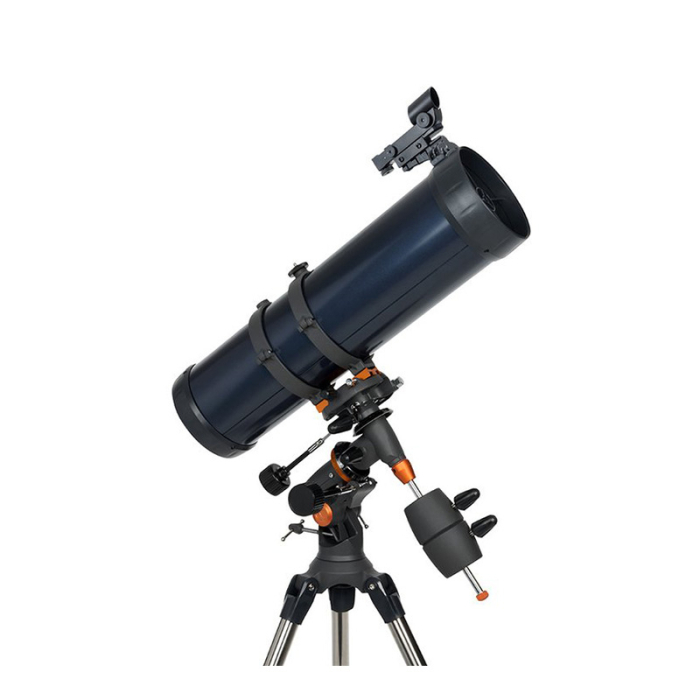
Individuals seeing via reflector telescopes experience a sensation of being at the universe's core. It is as if the night sky unveils a canvas exclusively for them. These tools utilize the straightforward yet ingenious concept of employing mirrors instead of lenses. The primary parabolic mirror collects dim starlight and concentrates it into a distinct, luminous image. The secondary mirror channels the image to an eyepiece strategically positioned on the edge of the tube. Due to their construction, reflectors are excellent for deep-sky observation as they enhance the brightness and apparent size of nebulae, galaxies, and star clusters. Their construction of open tubes facilitates rapid cooling at room temperature, hence enhancing optical performance throughout extended viewing periods. They can be set up as a classic Dobsonian for easy sweeping views of the Milky Way or as an equatorial mount for more accurate tracking.
Highlighted Products
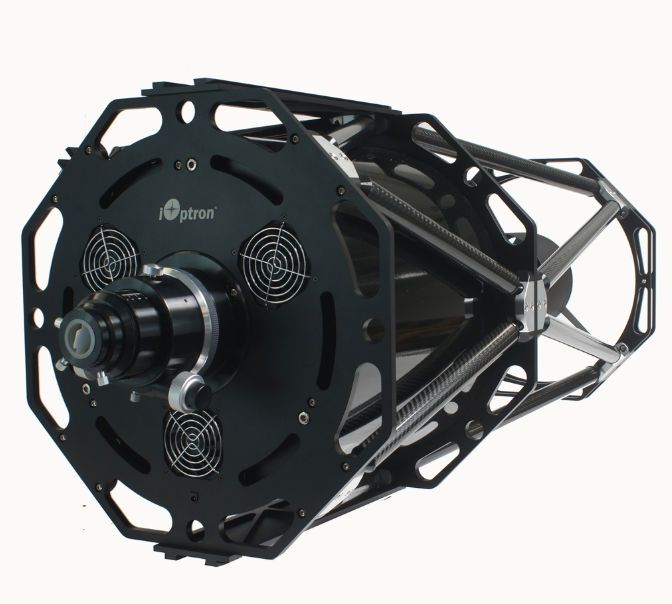
iOptron 14" Photron Truss Tube Ritchey-Chretien Telescope
For astrophotographers, the iOptron Photron 14" Truss Tube RC telescope offers excellent contrast images—perfect for capturing planets and deep-space objects. Low thermal expansion quartz mirrors and carbon fiber truss supports allow its optical design to maximize color and monochrome images.
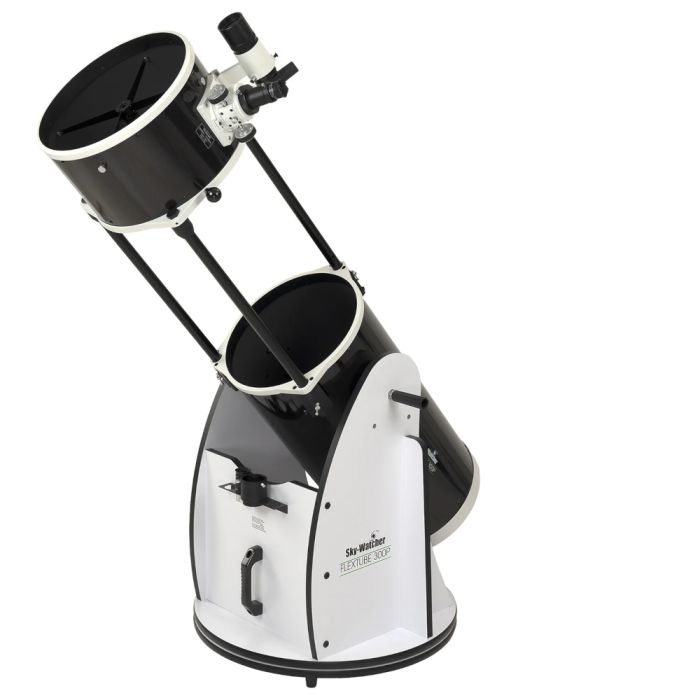
Sky-Watcher 12" f/5 Flextube Dobsonian Telescope
12" f/5 Flextube for the Sky-Watcher Excellent for deep-sky viewing, Dobsonian Telescope is a great amateur tool for comet hunters since it provides exceptional vision and use for catching elusive deep-space jewels like Horsehead Nebula and M76 spiral galaxy.
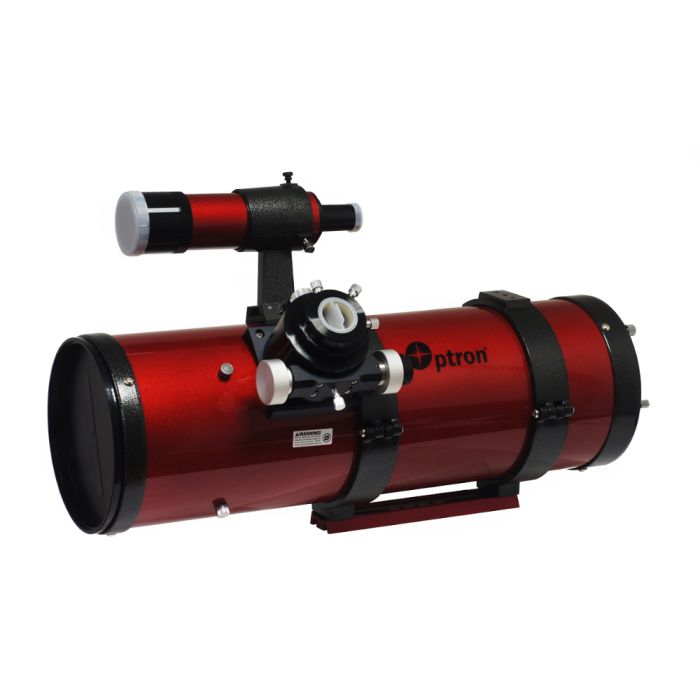
iOptron 6" f/4 Newtonian OTA
Deep-sky imagery with a DSLR or astronomy camera would find iOptron's 150mm f/4 Newtonian optical tube assembly perfect. Its 2" focuser, twin split-hinged mounting rings, 8x50 finder, and Vixen type dovetail plate marks.
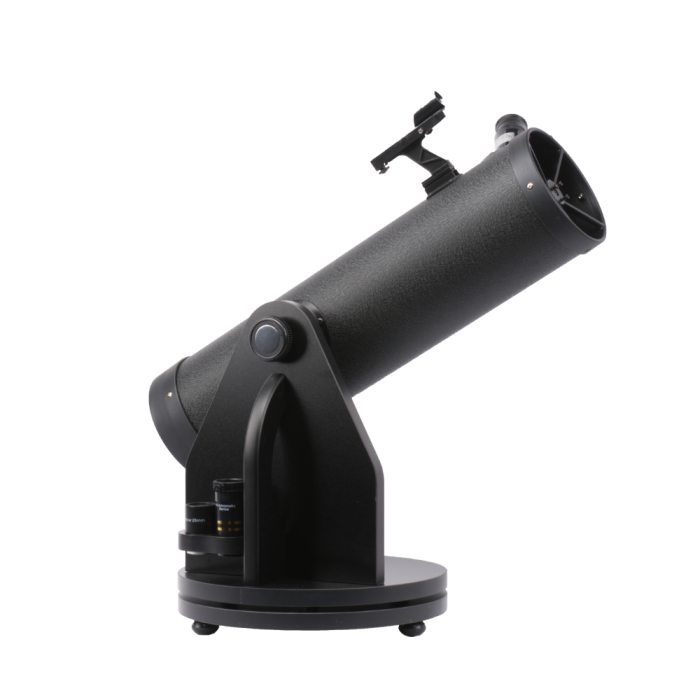
Orion SkyScanner 102mm Table Top Reflector Telescope
Because of its compact design and outstanding light-gathering capabilities, the Orion SkyScanner BL 102mm TableTop Reflector is an excellent choice for individuals who are just beginning to work with telescopes. Detailed images of deep-sky objects, Saturn, and the moon's surface can be captured by its 640 mm focal length and 4-inch aperture.. A red dot finder that does not magnify and a Dobsonian base make navigating the telescope a breeze. This set is appropriate for studying large nebulae as well as finely detailed celestial objects, thanks to its three-element design that incorporates a 3x Barlow lens, two 25.6x and 64x Kellner eyepieces, and a total of 192x magnification.
Celestron AstroMaster 130 EQ - 130 mm Newtonian Reflector Telescope on Equatorial Mount
The Celestron AstroMaster 130 EQ Reflector Telescope suits both astronomical and terrestrial observations well. Clear pictures of the Moon and planets are shown, allowing one to see the rings of Saturn and the moons of Jupiter. However, aperture and light-gathering capability are more appropriate for deeper space objects with a higher luminosity. Notable features include a StarPointer that does not require any tools for installation, optics that are straight and level, a steady tripod, coated glass optics, and the planetarium program "The Sky" that includes a database of 10,000 celestial objects. Among its features are an aperture of 130 mm, a focal length of 650 mm, and the ability to achieve magnifications of 32.5x and 65x using interchangeable eyepieces.
More About This Category
The reflector telescope has one of the primary benefits for its users. They converge light through mirrors and not lenses, as in the case of refractors. This spectrum in the optical design provides enormous advantages, especially in minimizing chromatic aberration. Common in refractors, particularly at high magnitudes, chromatic aberration is a distortion that sees colors tear along picture fringes for those with only the beginning of their space adventure to the stars, as well as for those veterans wanting to add more time to their space adventures, reflector telescopes that meet a broad spectrum of viewing preferences are chosen.
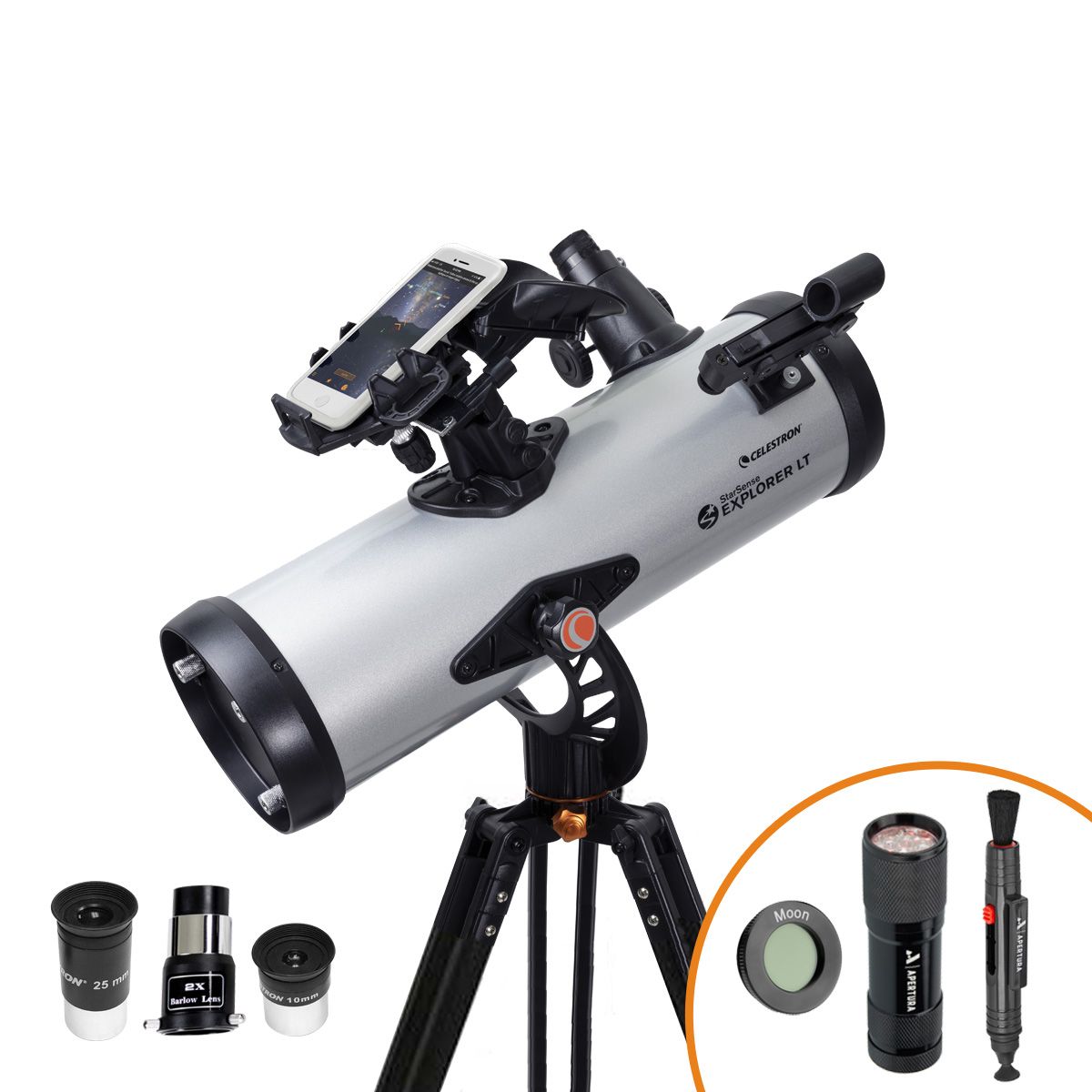
Made for amateur astronomers, Bird-Jones reflectors are small, easy-to-use telescopes. Their built-in corrector lens and primary mirror allow for a notable focal length inside a shorter tube. Combining a smartphone with the Celestron StarSense Explorer LT 114AZ Reflector Telescope offers exact object center direction and star pattern data. With thorough information on their observations, the app lets users concentrate on objects in the nocturnal sky. For those who enjoy astronomy, this clever gadget presents countless chances.
Notable for their economy are also reflector telescopes. Instead of costly glass lenses, mirrors enable these telescopes to simplify and reduce production costs. Anyone who wants to maximize their observational skills without overstretching their money should make this option. A reflector's straightforward form also adds to its durability and simplicity of maintenance since mirrors are usually less prone to breakage than lenses and do not need the same degree of alignment.
Who considers the lunar highlands, valleys, and craters staring through a reflector lens? A larger aperture helps to bring the sharp focus of far-off heavenly beauty and faint objects, improving the clarity and detail of these views, which is ideal for reflectors. One can see another planet or the moon more clearly and with more advantages. Exposing more exact photos of Jupiter's Great Red Spot, Saturn's rings, and Mars' polar caps may help reflector telescopes improve planetary views. With a reflector's light-gathering capacity increasing with aperture size, astronomers may view darker objects as difficult or impossible with smaller telescopes.
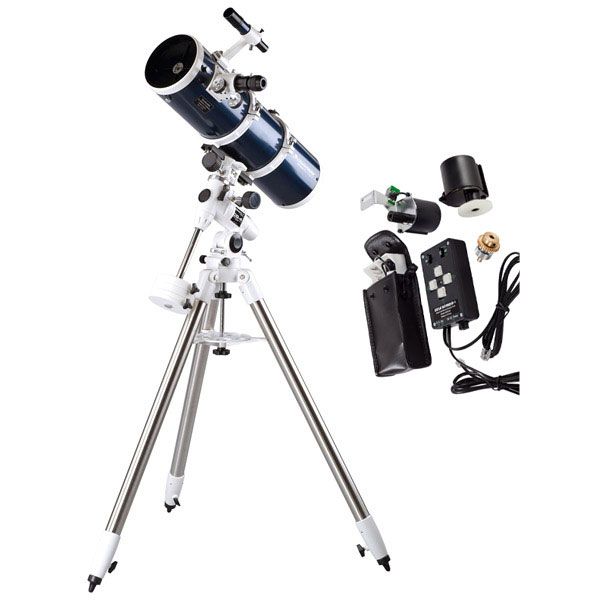
Comprising a celestial blue optical tube assembly, a 2’ Crayford-style focuser, a Newtonian telescope with a 150mm primary and secondary mirror, and a 6x30 finderscope, the Celestron Omni XLT 150 telescope is Its five-minute finder/telescope alignment, Classic Celestron CG-4 German Equatorial Mount, dual-axis drive motor, tripod, 150mm aperture, 750mm focal length, 30x magnification, and StarBright optical coatings define it.
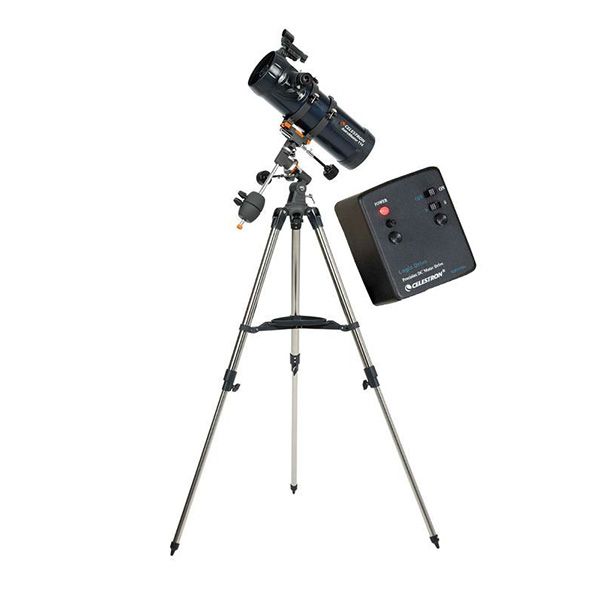
Newtonian reflector telescopes are among the most often used ones. The Celestron AstroMaster 114 EQ makes perfect sense with a parabolic primary mirror collecting and focusing light and a flat secondary mirror guiding the light to the eyepiece! Unlike many other beginning telescopes at this budget, its motor drive has enough light-gathering capacity to travel out of the Solar System and into deep space. With this compact equatorial mount, which includes complex features such as setup circles and slow-motion control wire, simple use or alignment will let you follow the movement of the stars as they arc across the sky.
From modest versions for casual stargazing to significant, observatory-grade devices meant for deep-sky investigation, reflector telescopes provide flexibility. Barlow lenses or specialist eyepieces will help to improve their performance even more. Reflectors shine in astrophotography because of their rapid focal ratios and big apertures, which allow amazing deep-sky object pictures. Famous for capturing the beauties of the night sky, these characteristics significantly improve image quality and help to decrease star trailing.