Telescope mounts, tripods, and piers serve as the indispensable foundation for all astronomical viewing, ensuring the critical stability and precision needed for successful observation. A sturdy component, such as the Sky-Watcher CQ-350 Mount, is essential for accurate tracking because it minimizes the destructive effects of vibration on long-exposure images. By providing a rigid base and precise movement, these accessories enhance performance, allowing astrophotographers to achieve sharp, detailed celestial images and allowing visual observers to enjoy steady, clear views.
Highlighted Products
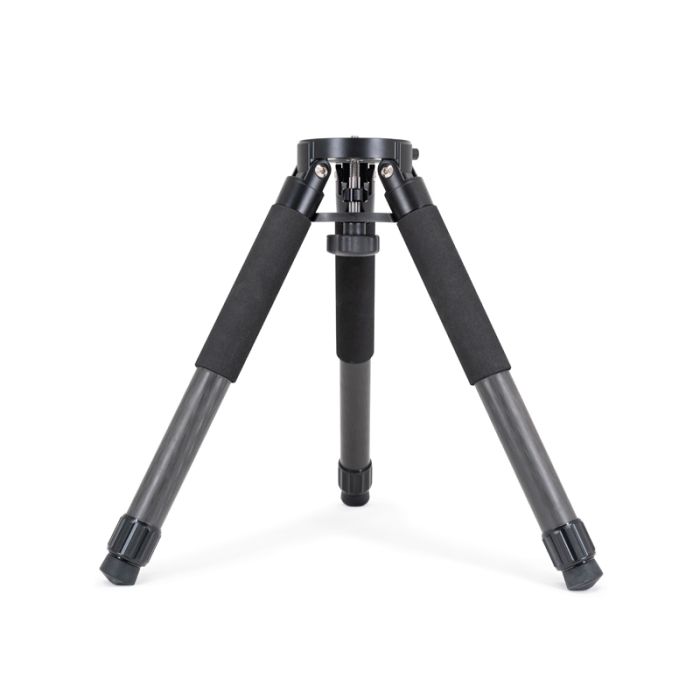
ZWO TC40 Carbon Fiber Pipe Tripod
The ZWO TC40 Carbon Fiber Pipe Tripod offers a lightweight yet robust foundation for astrophotography. Its carbon fiber construction enhances stability while minimizing weight, making it ideal for portable setups. With adjustable legs and a high load capacity, it ensures secure mounting, complementing ZWO mounts for precise celestial tracking..
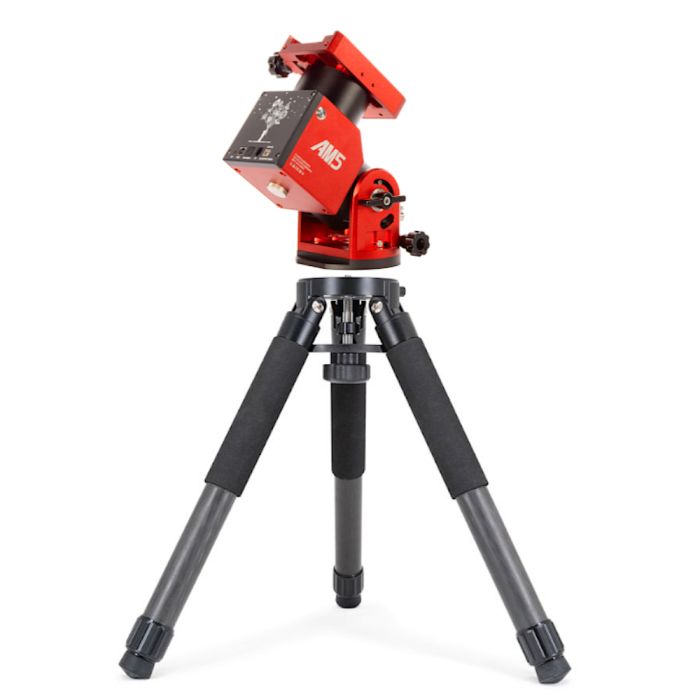
ZWO AM5N Harmonic Drive Equatorial Mount and Tripod
The ZWO AM5N Harmonic Drive Equatorial Mount and Tripod (2024 Version) offers precision tracking with its strain wave gear system, eliminating the need for counterweights. Its compact, lightweight design ensures portability, while high payload capacity supports various telescopes. Ideal for astrophotography, it provides smooth operation and enhanced stability for deep-sky imaging.
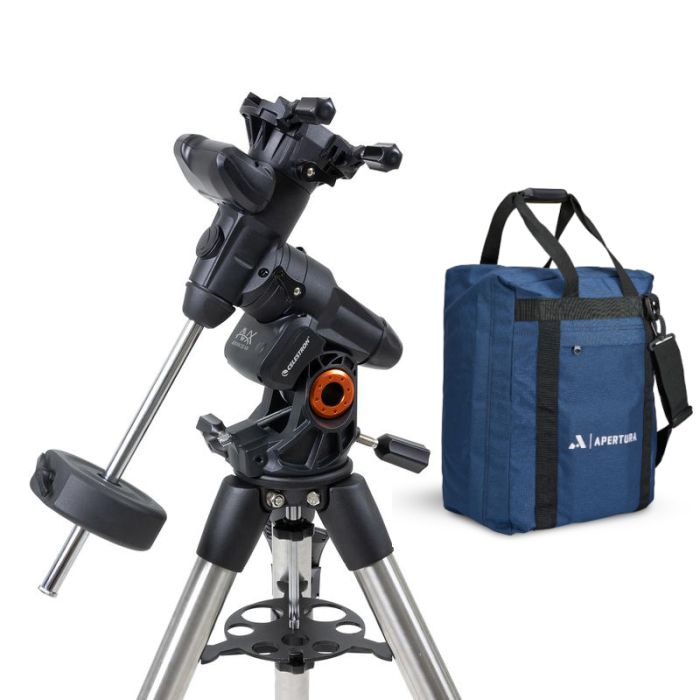
Celestron Advanced VX Equatorial Mount
The Celestron Advanced VX Equatorial Mount is designed for astrophotographers and observers, featuring precise tracking and smooth performance. With a 30 lb payload capacity, All-Star Polar Alignment, and PPEC, it supports long-exposure imaging. Its sturdy tripod and advanced electronics ensure stability, making it ideal for deep-sky and planetary observations.
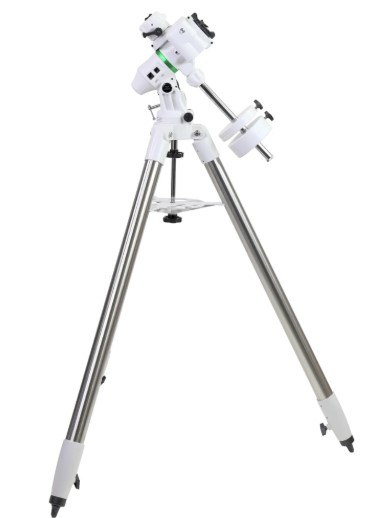
Sky-Watcher EQ-AL55i Pro Mount
The Sky-Watcher Star Adventurer GTi is a highly portable, dual-axis equatorial mount that breaks away from traditional camera trackers by incorporating full GoTo functionality. This mount connects wirelessly to your smartphone or tablet via the SynScan Pro app, allowing it to automatically locate and precisely track over 42,000 celestial objects. Despite its lightweight and compact form factor that is ideal for travel, it supports a payload up to 11 pounds, making it suitable for both camera-and-lens setups and small telescopes. With an integrated illuminated polar scope and an ST-4 autoguider port, the GTi delivers the precise, reliable tracking needed for stunning long-exposure astrophotography.
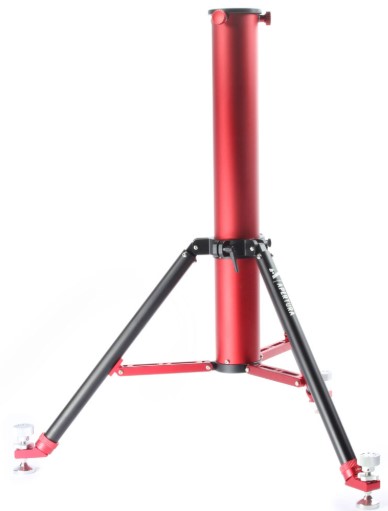
Apertura Anchor - Pier for Strainwave Mounts
The Apertura Anchor Pier is a portable pillar designed to enhance the performance and clearance of modern strainwave drive mounts, like the ZWO AM5. By lifting the mount significantly higher than a standard tripod, it helps prevent longer telescopes from hitting the tripod legs, especially when pointing near the zenith. This robust solution offers increased stability and superior ease of use compared to many standard tripods, while still maintaining portability for transport to dark sky sites. The Anchor Pier is an ideal accessory for astrophotographers looking to maximize their mount's capabilities for a clearer field of view.
More About This Category
Choosing the Right Telescope Mount: A Guide for Amateur Astronomers
Selecting the ideal telescope mount is pivotal for achieving a satisfying and pleasurable stargazing experience. The mount not only bears your telescope but also guarantees steadiness, which is essential for lucid, rich observations. When deciding on a mount, it's a good idea to consider its maximum load capacity, the mount style, and if you favor a computerized or non-computerized arrangement. Whether altazimuth or equatorial, the mount is crucial as it supports the instrument and facilitates tracking celestial objects throughout the night sky. Consider carefully your requirements now and anticipated needs later when determining payload specifications. Stability remains a top priority regardless of automated or manual system, as slight vibrations can degrade the view.
Understanding Payload Capacity
It is crucial to select the ideal telescope mount. The mount's maximum supported weight, or payload capacity, must accommodate the telescope and any accessories. Aim to stay under eighty percent capacity for visual use to maintain stability during observation. Weight becomes even more significant for astrophotography, requiring complete stillness to capture sharp, clear shots without vibration. Therefore, imaging necessitates utilizing under sixty percent of the limit. Varying sentence structures, like some that are longer or more intricate, with shorter, simpler ones, can read more naturally. Overall, fully comprehending limits avoids compromising quality and functionality for visual or photographic use under any conditions.
Types of Telescope Mounts
There are two main types of telescope mounts: Equatorial mounts and Alt-Azimuth mounts. Each type has its strengths and is suited for different types of observing.
Equatorial Mounts
Equatorial mounts, specifically the prominent German Equatorial mounts, are engineered to trail the rotation of the Earth. This renders them splendid for the two visual scrutinizing and astrophotography. Equatorial mounts can trace celestial entities smoothly across the sky by lining up the mount with the Earth’s axis, rendering long-exposure photography simpler.
These mounts are frequently more challenging to install compared to alt-azimuth mounts. Still, they furnish exact tracking, invaluable for capturing comprehensive depictions of planets, stars, and other celestial objects. Additionally, while requiring a more nuanced setup than alt-azimuth designs, equatorial platforms' capacity for sustained panning over the firmament far outweighs this hurdle, generating sharper, longer observations for both scientific and informal observation.
Alt-Azimuth Mounts
Alt-azimuth mounts, such as the iOptron Cube Pro, provide casual stargazers with effortless observing thanks to their elementary yet intuitive design. Tracing only two orbital planes, altitude and azimuth, allows for uncomplicated alignment and swift movement between celestial sights. However, their terrestrial-tied motion registration must fully offset the sky's daily progression.
While ideal for leisurely tours along the stellar river, alt-azimuth platforms lack the precision required for extended photographic documentation of the heavens' evolving tapestry. The uncompensated rotational shift inherent to their terrestrial-tethered operation proves problematic for long-exposure attempts to freeze fleeting astronomical phenomena or trace deep sky treasures against the starry backdrop. For dedicated astrophotographers, equatorial mounts emerge as a superior choice through their capacity to smoothly counterbalance the sky's natural sweep.
Dual Mounts
For those who want the best of both worlds, dual mounts are available. These mounts can switch between equatorial and alt-azimuth modes, offering versatility for different types of observations.
A stable tripod or pier is crucial for a great experience when observing the night sky. Tripods are designed to support smaller telescopes, making them portable and easy to set up. Conversely, piers are more robust and provide a permanent setup for larger telescopes, ensuring stability during extended viewing sessions. Both options include accessories to enhance functionality, such as vibration pads to reduce shakes and wheeley bars for easy transport. Choosing the right tripod or pier will greatly improve your stargazing experience and help you enjoy many nights under the stars.